
This guide explains how the software works. For your clinic's own GST position, speak to your CA.
GST and physiotherapy: the basics
In India, healthcare services by a clinical establishment or an authorised practitioner are generally exempt from GST. For most clinics, that covers physiotherapy treatment. Other things a clinic sells may be taxable, for example:
- braces, supports, tapes, pillows and other products at the counter;
- equipment given on hire;
- non-clinical services.
So a GST-registered physio clinic often has bills with no tax at all, and some bills where a product carries GST. That is why one-size billing software causes trouble.
How Clinidiary handles GST
- Your GSTIN on every bill. Set it once under Manage → Practice.
- Treatment is exempt by default. A new service is created tax-free. You set a GST rate only on items that are not healthcare.
- A bill of supply where there is no tax. A GST-registered clinic billing exempt treatment should not call the bill a tax invoice. Clinidiary gives such a bill the heading "Bill of supply".
- GST on products, at the rate you set, with the price shown including or excluding GST as you choose.
- HSN and SAC codes on each line, HSN for goods and SAC for services, so the bill carries what your CA needs.
From visit to bill in seconds
- The physio finishes the session and marks the appointment Completed.
- The front desk opens the Billing tab on the appointment. The service and price are already there.
- Add anything else the patient is buying, say a knee brace. It comes off your stock automatically.
- Issue the bill. It gets the next number in your series and today's date.
- Take the payment.
The dashboard has a Not yet invoiced card: appointments that happened but were never billed. Check it every evening and nothing slips through.
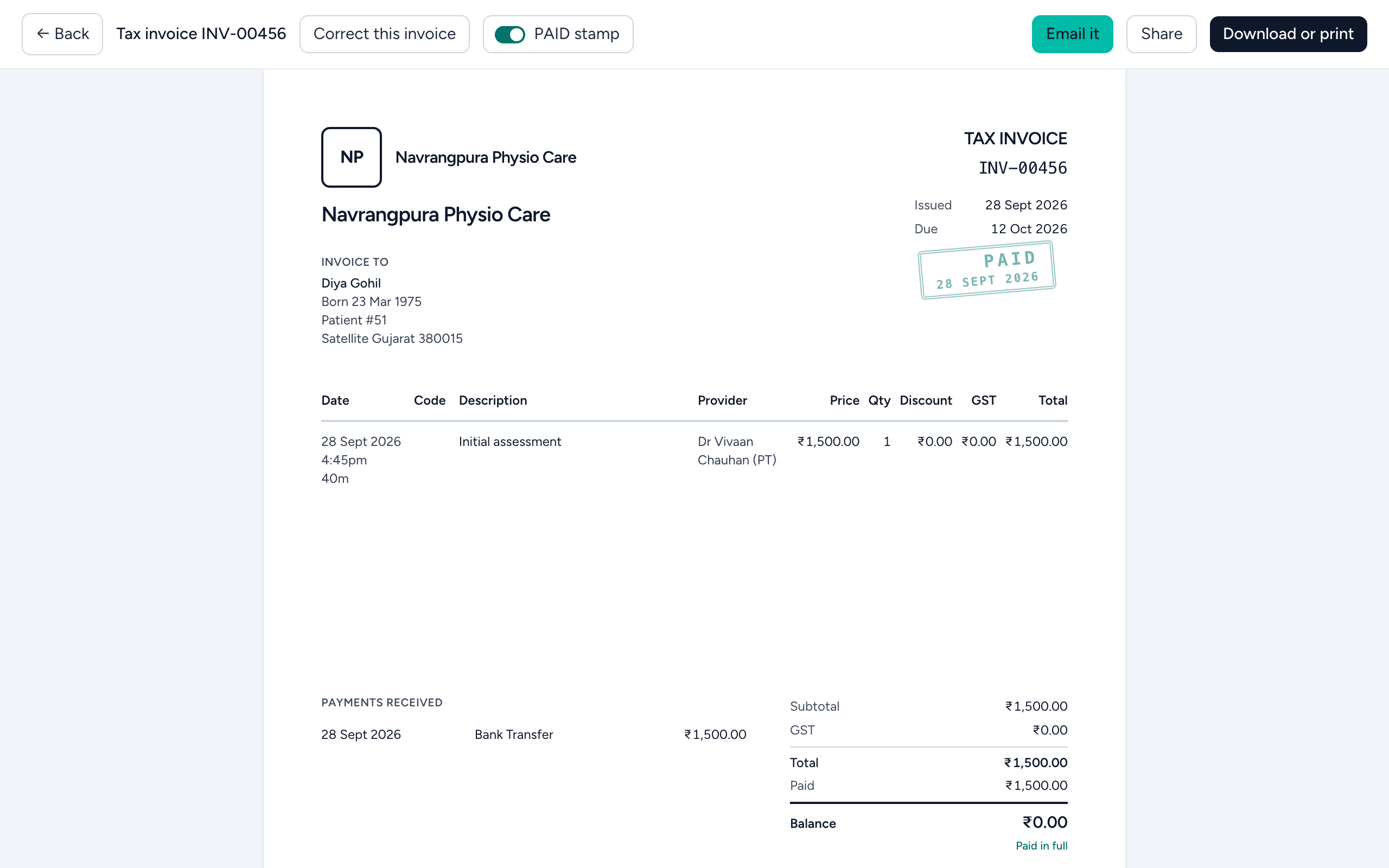
Cash, UPI and card, on one bill
Patients pay in different ways, sometimes two ways on one bill. Clinidiary records each payment with its method: cash, UPI, card, bank transfer or account credit.
UPI QR codes from your own UPI ID
Clinidiary can show a UPI QR code for the exact amount, built from your clinic's own UPI ID. The patient scans it with any UPI app and the money goes straight into your bank account. There is no payment gateway, so there is no gateway fee and no waiting for settlement. The front desk notes the UPI reference when recording the payment, so the bank statement matches.
Part payments
A patient pays ₹1,000 today and the rest next visit? Perfectly normal. The bill shows as part paid, with the balance owing, until it is cleared.
Packages on the bill
When a patient has bought a package of sessions, each visit is drawn from the package instead of being charged again. The front desk cannot accidentally charge a package patient twice. Read treatment packages and prepaid sessions for how packages work.
Discounts that you can report on
Senior citizen discount, staff family, a referral offer: set them up once in the discount list and apply them from there. A discount chosen from the list shows up in reports, so you can see what concessions cost you over a year. A typed-in discount cannot be counted.
Correcting a bill the right way
Once money has been taken against a bill, its total never changes. If something needs correcting, you issue a credit note against it, and both stay on record. A bill that should never have existed can be voided, with a reason. A refund is recorded as its own entry, also with a reason.
This sounds strict, but it is exactly what makes your accounts trustworthy. A year later, when a patient or your CA asks what happened, the answer is right there.
Bills on WhatsApp and email
Indian patients want their bill on WhatsApp, often to forward to an insurer or employer. Clinidiary shares a bill as a link the patient can open and download. Bills can also be emailed from the patient's file. See WhatsApp appointment reminders for the other ways the clinic uses WhatsApp.
Mediclaim and insurance
Mark a patient's Mediclaim cover on their file so the front desk knows at a glance. Their bills and statements are ready to send to the insurer, a TPA or an employer.
A day end that balances
At closing time, the dashboard's Money in today splits what came in by method: cash in the drawer, UPI in the bank, card on the terminal. Counting the drawer and checking UPI credits are different jobs, and the split makes each one quick. For the monthly picture, clinic reports show revenue, what was collected and what is still owed.
Frequently asked questions
Is physiotherapy treatment exempt from GST in India?
Healthcare services by a clinical establishment or an authorised practitioner are generally exempt, and that usually covers physiotherapy treatment. Products you sell, such as braces, may carry GST. Check your own position with your CA.
What is a bill of supply?
A bill of supply is the document a GST-registered business issues for exempt supplies, instead of a tax invoice. Clinidiary uses this heading automatically when a bill carries no GST.
Can I accept UPI payments without a payment gateway?
Yes. Clinidiary shows a UPI QR code from your own UPI ID, so patients pay straight into your bank with no gateway fee.
How do I correct a bill that has been paid?
Issue a credit note against it. The original bill and the credit note both stay on record, which keeps your accounts clean.
Can I send a bill on WhatsApp?
Yes. Share the bill as a link on WhatsApp. The patient can open and download it.