
Find them on the diary
They are on today's grid, in their practitioner's column, at their time.
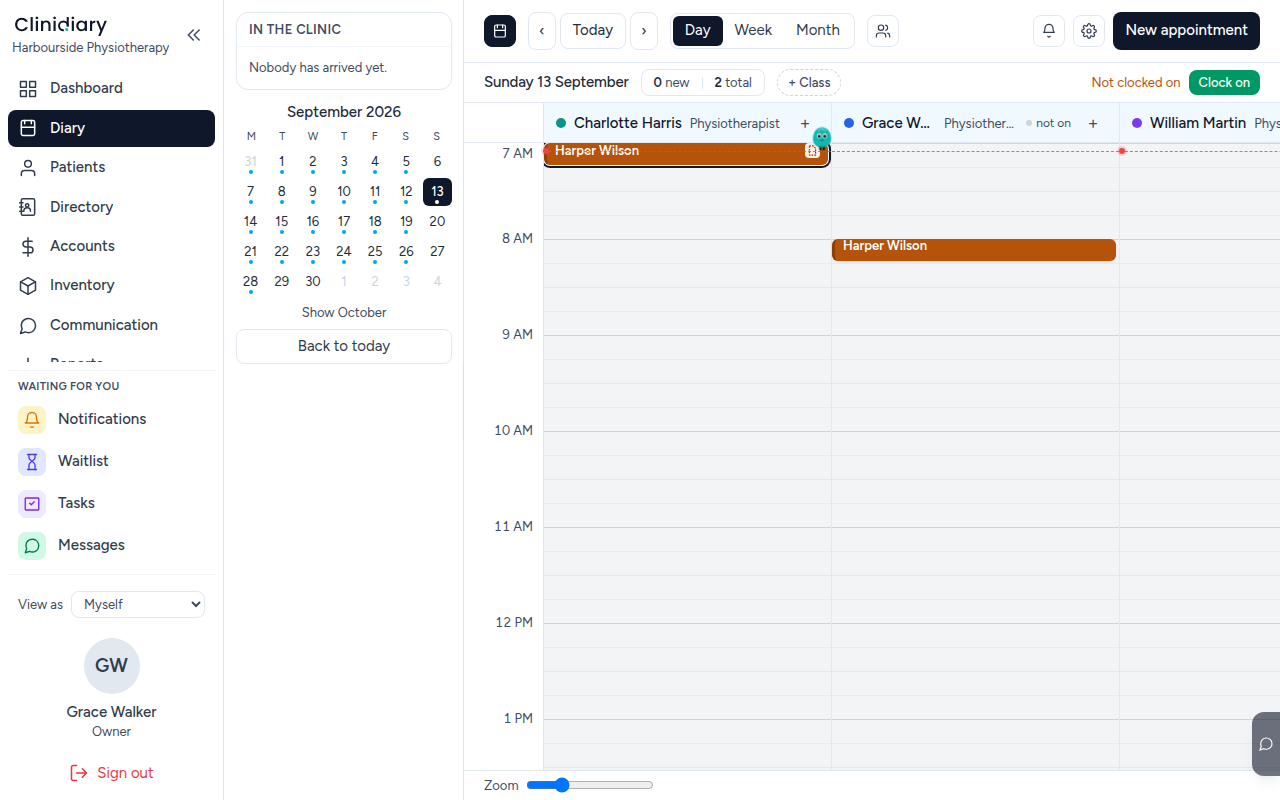
Click the booking
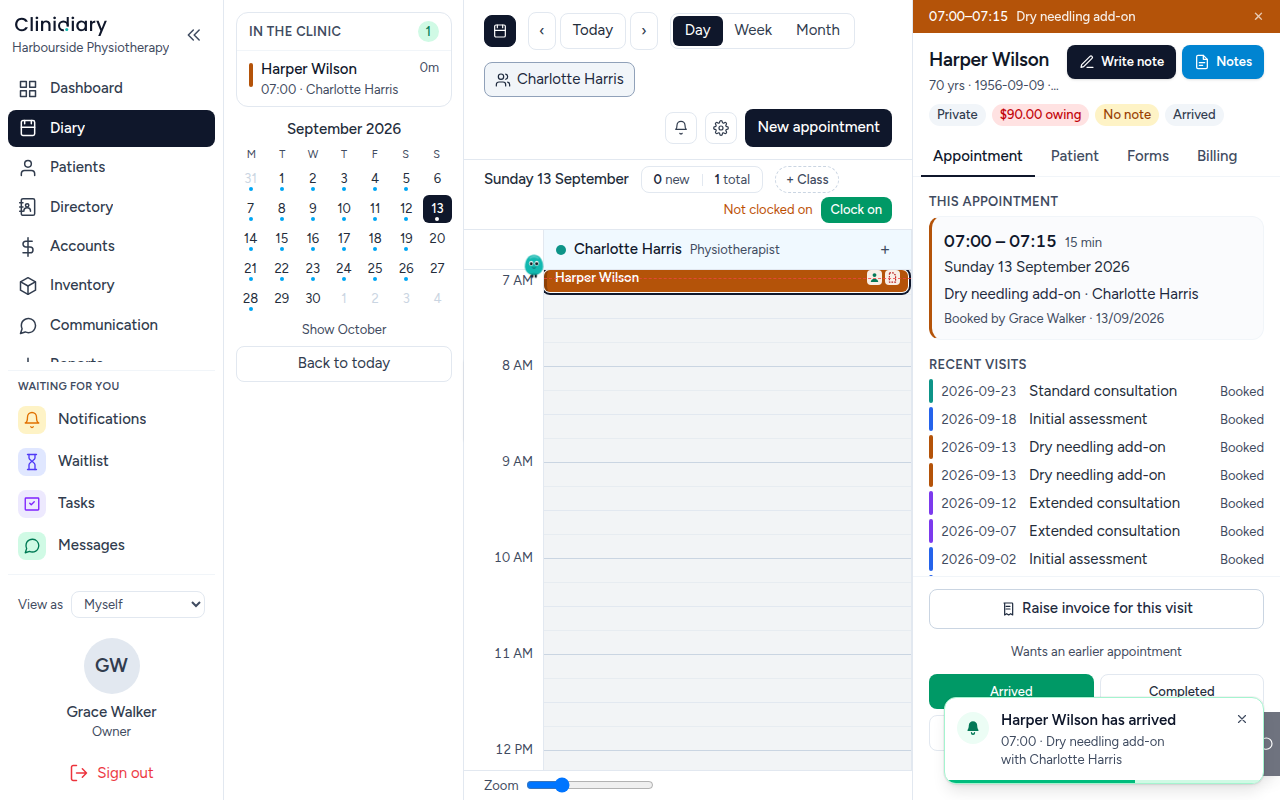
The appointment opens beside the grid rather than on top of it, so the rest of the day stays visible while you deal with one person.
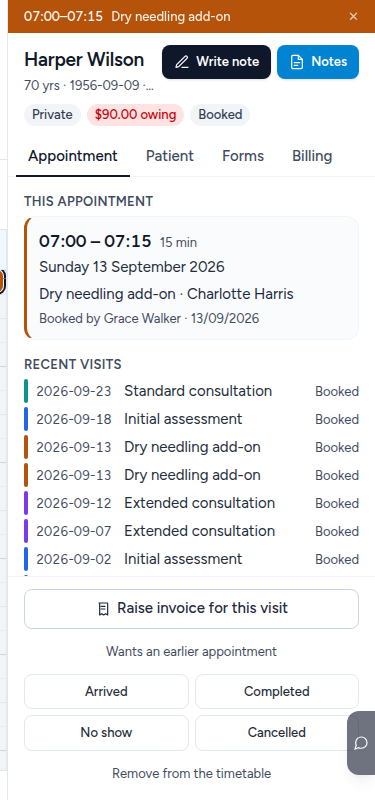
It shows the visit, who booked it, what is owing, and the patient's recent history — enough to answer "have they been before?" and "do they owe us anything?" without leaving the diary.
Mark them arrived
Four words at the bottom, and they are the whole record of what happened to a visit.
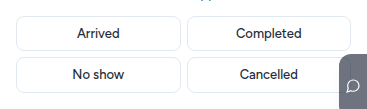
- Arrived — they are in the building and waiting.
- Completed — the visit happened. This is what the practitioner presses, not the desk.
- No show — they did not come and did not tell you. It is counted, and it is what the did-not-attend report is built from.
- Cancelled — they told you. Different from a no-show on purpose: one is a courtesy and the other is a cost, and a practice that records them as the same thing cannot tell which patients do which.
The rail says who is in
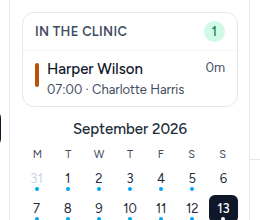
Everyone marked arrived appears here, with how long they have been waiting. The practitioner sees the same list, which is the point: nobody has to walk out and look at the waiting room to know somebody is in it.
Waiting times are real
The counter beside each name is minutes since they arrived, not minutes past their appointment time. Somebody who turned up twenty minutes early and has waited five reads as five — which is what they will tell you at the desk, and what the practitioner needs to know.
If they arrive and you are not ready
Mark them arrived anyway. The clock starting is the point: a waiting room nobody has recorded is a waiting room nobody can be told about, and the first anybody hears of it is the complaint.